Tuesday, 13 April 2010

Journeys into lesser known territories of Public Space


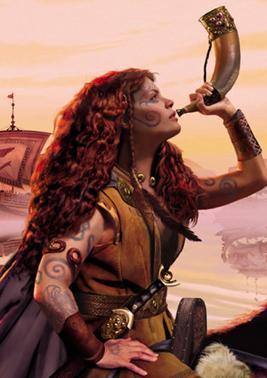
My wonderfully talented friend Blue organised a walk on Saturday on Hampstead Heath, taking us on an alternative journey through the area's history. It was fascinating - we heard stories about the Highgate Vampire (an incident from as recent as 40 years ago), the legend of Boudicca (pictured above) who apparently is buried under the mound in the middle of the heath, as well as a real life crucifix that happened in 1969.

The walk was also lead by Strange Attractor Mark Pilkington.

More information here and some Highgate stories here.


Sunday, 4 April 2010

Thursday, 18 March 2010

Queen of Heart shaped biscuits


Tomorrow I have a double special occasion to bake for. It is my Granny's 80th Birthday, and she is in London for the weekend staying with my Aunt in Forest Hill. I 'm really looking forward to seeing her, in all honesty it's been about 18 months since we were last together as she doesn't come down to London very often.
In the afternoon, I am heading West for Alex and Matt's wedding (party) to celebrate their civil ceremony that took place on Wednesday.

We all know how much I love making heart shaped biscuits, so I thought I would experiment away from my usual "lavender shortbreads" and try a jammy dodger style instead.

These are actually surprisingly easy to make! But they do require a little time and patience. I found the recipe online and thought I would share it with you.


Heart-shaped jam biscuits

Ingredients

* 225g unsalted butter, at room temperature, diced
* 100g caster sugar
* 200g plain flour
* 100g ground almonds
* 150g seeded raspberry jam
* icing sugar, for dusting


Method

1. In a bowl or food processor, mix the butter, sugar, plain flour and ground almonds until the mixture forms a dough.

2. Knead the dough into a large ball, then cover in clingfilm and leave to chill in the fridge for at least 5 hours.

3. Preheat the oven to 140C/gas 1.

4. Remove the dough from the fridge and knead it until softened. Divide into three equal portions and roll each portion out into a sheet 5mm thick.

5. Using a heart-shaped cutter of 6cm, cut out an even number of biscuit shapes. Using a palette knife, carefully place half of the biscuits onto a greased baking sheet.

6. Using a smaller (preferably 2cm) cutter shape of your choice, punch out the middle portion of each of the remaining biscuit shapes. Carefully transfer these onto a baking sheet using a palette knife and bake both batches of biscuits for 30 minutes or until the biscuits are golden brown.

7. Remove the biscuits from the oven and take them off the baking tray straight away and put onto a cooling rack to cool completely.

8. Spread a generous blob of jam onto the centre of the whole biscuits, then place the biscuits with the cut-outs on top and press together so that the jam peeks out through the heart.

9. Sieve a little icing sugar over the top.

(By Tana Ramsay - From Market Kitchen)


Delicious! My finished product is below:


All photos © me.

Tuesday, 2 March 2010

Tuesday, 12 January 2010

London in the 1920s.


I just came across this film. It's beautifully shot and the colours are remarkable for its time. This section of the film is from a bigger piece which captures a journey across Britain, ending up in London. It was made in 1927 by Claude Friese-Greene (cinematographer and son of moving-image pioneer William) who used an experimental biocolour process to produce it.

It's interesting to think back to the events of this period - The Great War had finished 9 years before, and I imagine nobody was really expecting there to be a second World War. Women still did not have suffrage - this came one year after the film was made.

There are so many contrasting scenes throughout - with images of the Thames, the Tower of London, Greenwich Observatory, the London docks, Whitehall, the Cenotaph, Trafalgar Square, Hyde Park, Marble Arch, Petticoat Lane, the Oval, the Changing of the Guard, Rotten Row, and the Houses of Parliament.

I adore the romantic visions of Hyde Park (04:47 mins in), contrasting with the hustle and bustle of the 'gentlemen' on Petticoat Lane (05:59) and the sweet scene of little children packing the roasted peanuts into tiny paper bags (06:52 mins in).

The BFI had recently restored this video using digital intermediate technology to remove the technical defects of the original.

There is more information on the BFI website, here

Saturday, 2 January 2010

Having a Seizure


I went back to the exhibition 'Seizure' today, just a couple of days before it is finished for good. I first went after it opened in September 2009 - Al took me there when we got back from ATP NY and wanted something fun and positive in London to look at post-NY depression. We met up in Elephant & Castle and I had no idea where we were going, and soon enough we were walking through a derelict estate on Harper Road. I still had no idea what to expect when we arrived at the dreary social housing. First of all we had to queue to get into one flat, to swap our shoes for welly boots, which was exciting but also made me nervous. What exactly was I getting myself into? Next we queued outside the exhibition itself, and it was then that I stepped into another world.
All around me were blue crystals. Everything I touched, everywhere I looked, were blue crystals. It was exciting but freaky. I felt out of my comfort zone, it was like stepping onto a new planet when I never knew of it's existence.

Re-visiting the project today was exciting again. This time I was prepared (and sadly there was no welly boot experience, just a one hour queue into the main exhibit) and I was looking forward to getting back in. It didn't disappoint.

There are only two days left before this exhibition closes and the site is demolished, I would definitely visit before it's too late!


All photos © me

Monday, 28 December 2009

Federico García Lorca

I am in Granada again this Christmas visiting my sister and brother-in-law, and today I walked up to the majestic palace of Alhambra. On my walk down I came across some small cafes and little shops, and it was there I came across some more postcards to rival the already beautiful images of Granada and flamenco dancers that I found yesterday at another little shop near my sister's house. The postcards I found were of this captivating young man that just looked back at me so elegantly and with such style I just needed to learn more about him. I asked my sister who he was, and she said he was a famous gay poet from Granada; Federico García Lorca. 

(below left) Salvador Dalí y Federico García 
Lorca  - Cadaqués, Girona 1927
On further research at home, I found out he was in fact possibly the most important Spanish poet and dramatist of the twentieth century. He was a member of the 'Generation of 1927', a group of writers who advocated avant-gardism in literature. He worked on film productions alongside Dalí and Louis Buñuel, forming a strong and passionate friendship with Dalí, which then led to Dalí refusing these advances. He later interpreted that Dalí and Buñuel's short film Un Chien Andalou (1928) was based on him, which he saw as an attack upon himself, and his homosexuality.

Sadly, García Lorca was assassinated by Nationalist militia a month after the Spanish Civil War broke out, in August 1936. It is thought the motives of his death were due to his left-wing views, Republican sympathies and homosexuality - all of which made him a target for followers of Franco at the start of the civil war.

His place of rest is still unknown, although it was presumed he was placed beside a winding mountain road that connects the villages of Viznar and Alfácar. Archaeologists from Granada started to excavate the grave just a couple of months ago, in October. Sadly, only a week ago nothing was found, and so they gave up the search, failing to find his grave. The mystery remains unsolved.


"You will never understand that I love you/ because you sleep in me and are asleep./I hide you, weeping, persecuted/ by a voice of penetrating steel."
Sonetos del Amor Oscuro, Federico García Lorca